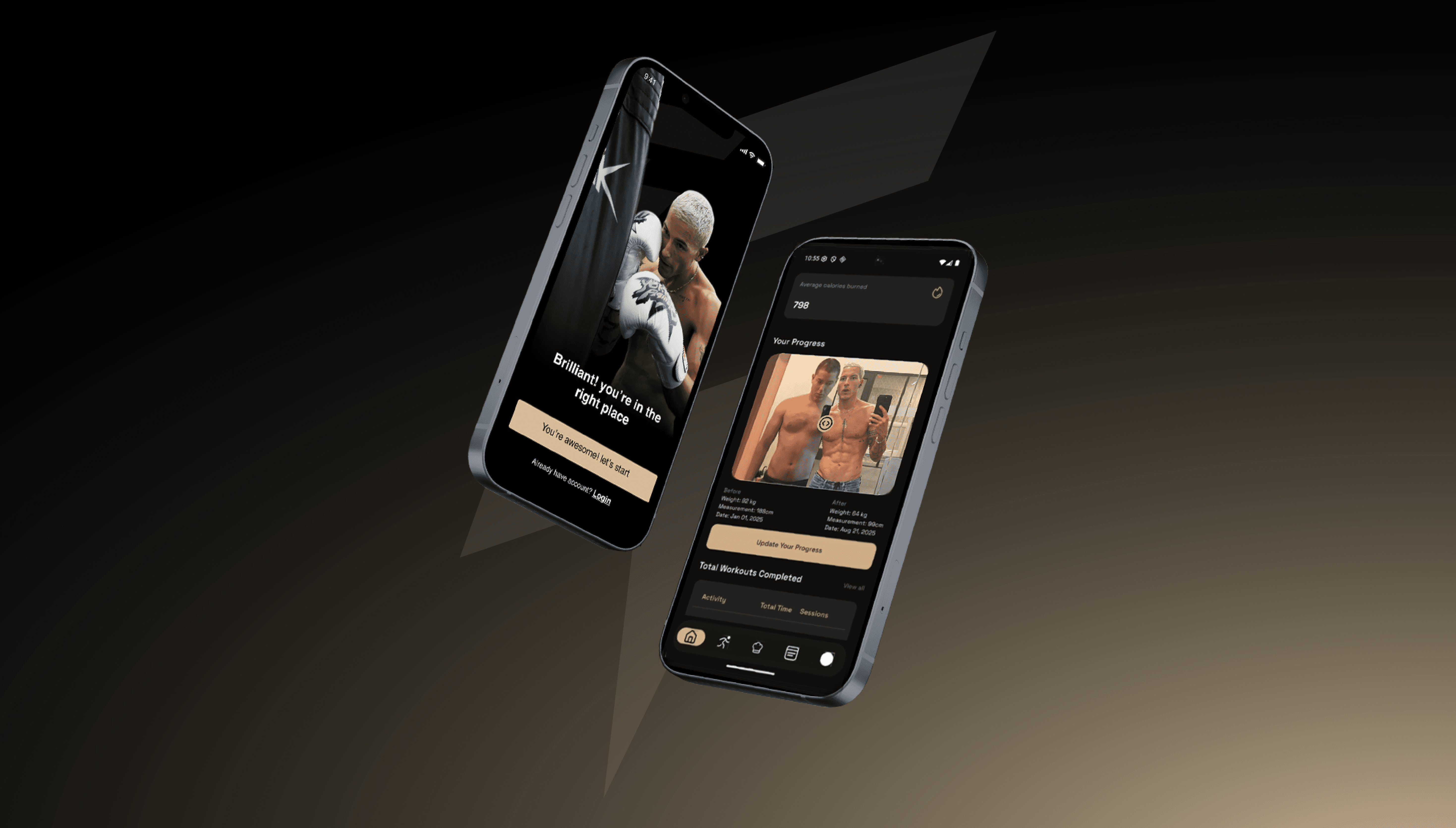
Designed a fitness app for millions of Taz Skylar followers.
00
Overview
NotFit is a fitness mobile app designed for people who prefer working out at home instead of going to the gym. It offers simple, guided workouts, live classes, and easy-to-follow programs that help users stay consistent without feeling overwhelmed. Built with fitness creator Taz Skylar, the app focuses on making fitness more accessible, engaging, and beginner-friendly.
Problem
The fitness app market is saturated, yet a large segment of users remains underserved — particularly those who: - Feel intimidated by gym environments - Prefer working out at home - Drop off due to overly complex apps Most existing solutions prioritize performance tracking and structured training, often at the cost of accessibility. Through stakeholder discussions and early exploration, three key gaps emerged: 1. High entry barrier Users struggle to start due to complex onboarding and decision overload. 2. Overwhelming interfaces Too many metrics, filters, and program choices create friction. 3. Low retention Motivation drops when the experience feels rigid or disconnected.
Research
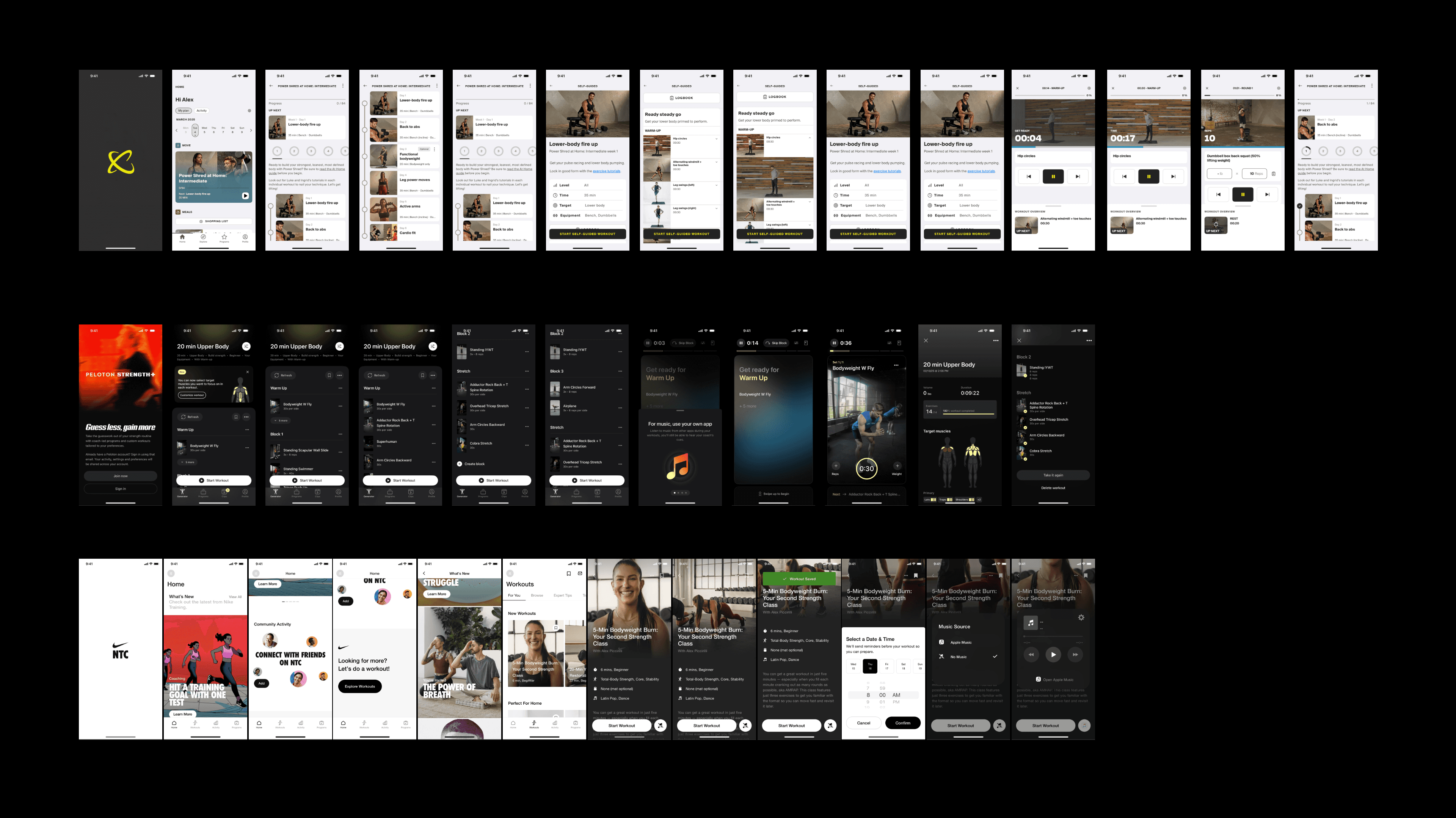
The research phase combined competitor analysis, product benchmarking, and AI-assisted exploration to understand patterns and gaps in the fitness space.
Key references included:
Centr
Peloton
Nike Training Club
Key Observations
Most apps rely on structured programs over flexibility
Onboarding flows are often long and commitment-heavy
Interfaces prioritize data over usability
Content discovery is secondary to planning
Insight
Users don’t struggle with fitness itself —
they struggle with starting and staying consistent.
This shifted the design direction toward reducing cognitive load and enabling instant action.
Objective
The primary goal was to design a fitness experience that:
Reduces friction between opening the app and starting a workout
Supports home-based, equipment-light routines
Balances content, structure, and community
Feels intuitive for a non-gym audience
From a product perspective, the app also needed to:
Support a freemium → subscription model
Highlight premium content without disrupting UX
Leverage the creator ecosystem of Taz Skylar
Impact
NotFit launched on the App Store & Google Play with a strong foundation for early adoption.
While post-launch metrics are still being collected, the product is positioned for scale due to:
Built-in audience from the creator ecosystem
Simplified onboarding and workout access
Clear differentiation from traditional fitness apps
Early feedback indicates:
Users find the experience easy to navigate
Workouts feel more approachable compared to gym-focused apps
The content-driven format improves engagement and motivation
Final Solution
The final product delivers a low-friction, content-first fitness experience designed around user behavior rather than rigid systems.
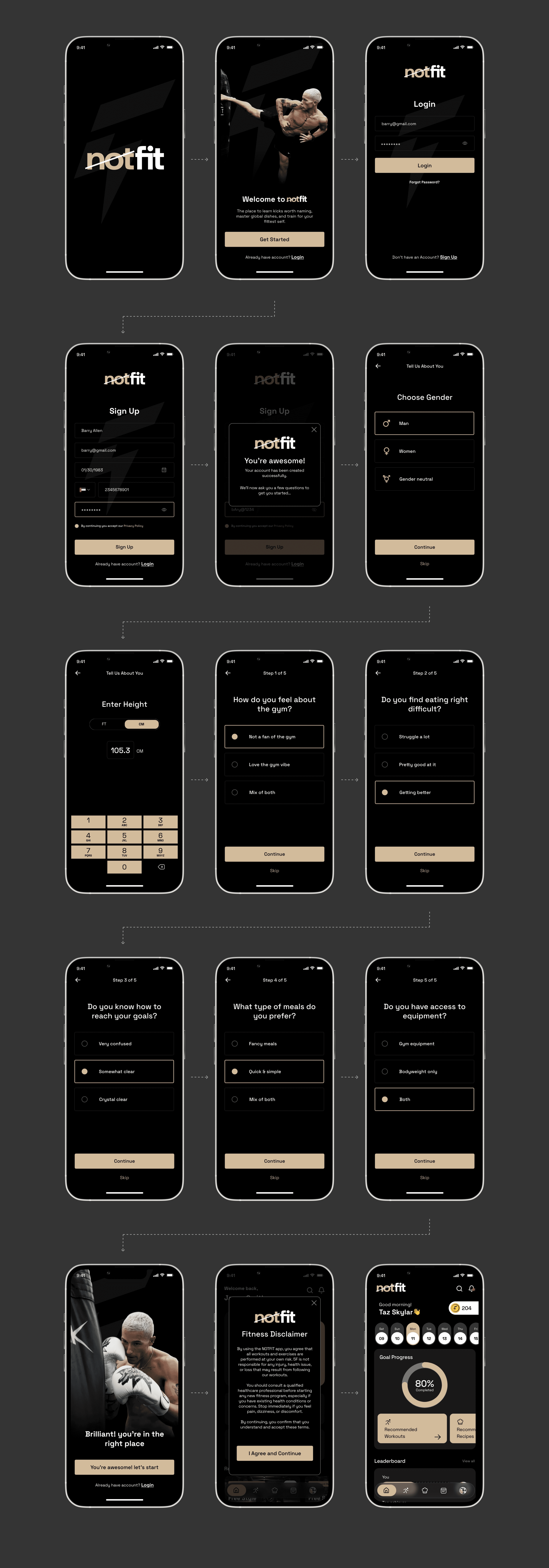
At the core of NotFit is a simplified structure built on a few key pillars:
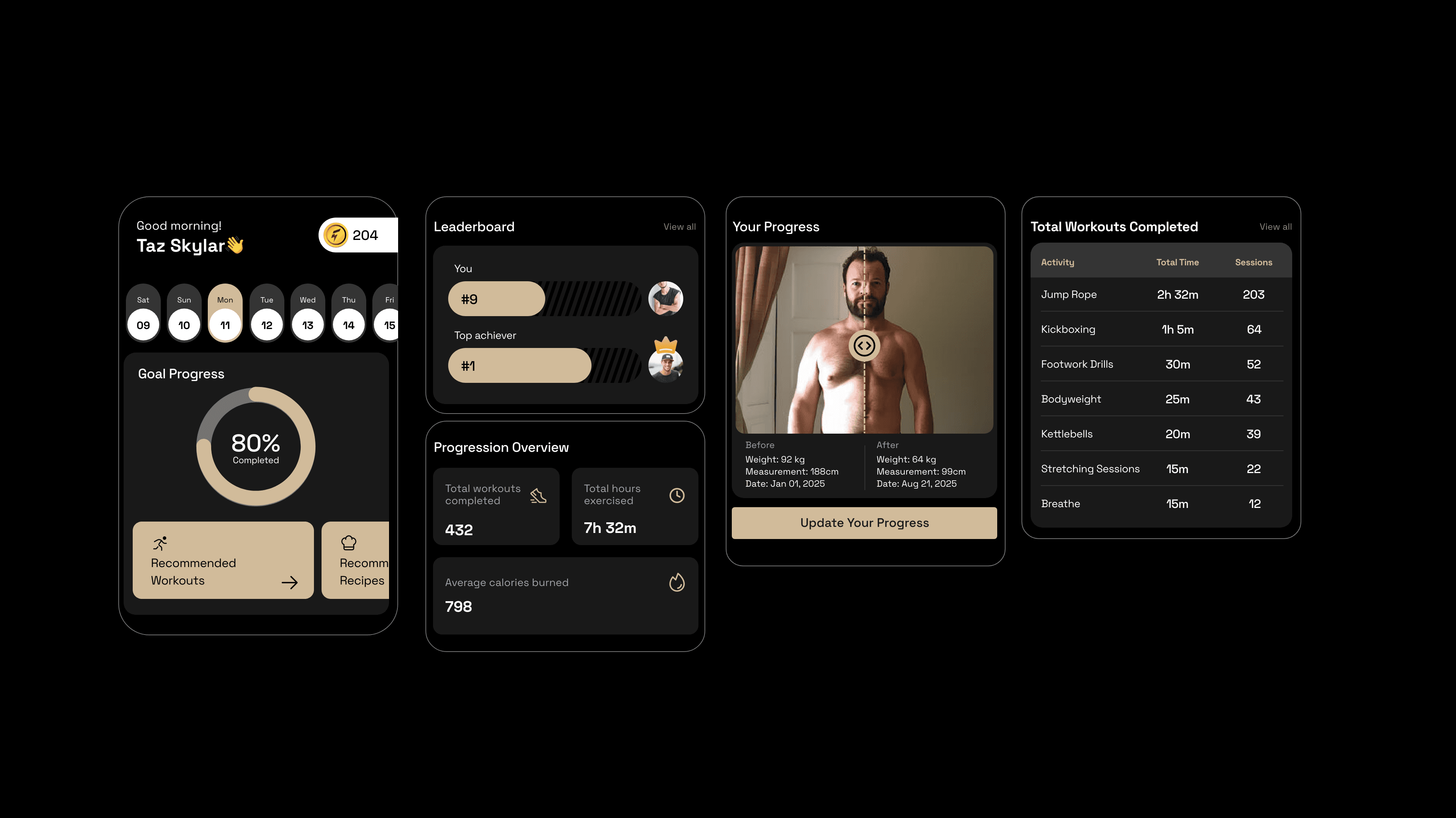
1. Dynamic Daily Feed
A personalized, scrollable feed that combines workouts with key user insights — including goal progress, streaks, total workouts completed, and before/after transformation tracking. This creates a single, engaging space where users can both take action and see their progress, without switching between multiple sections.
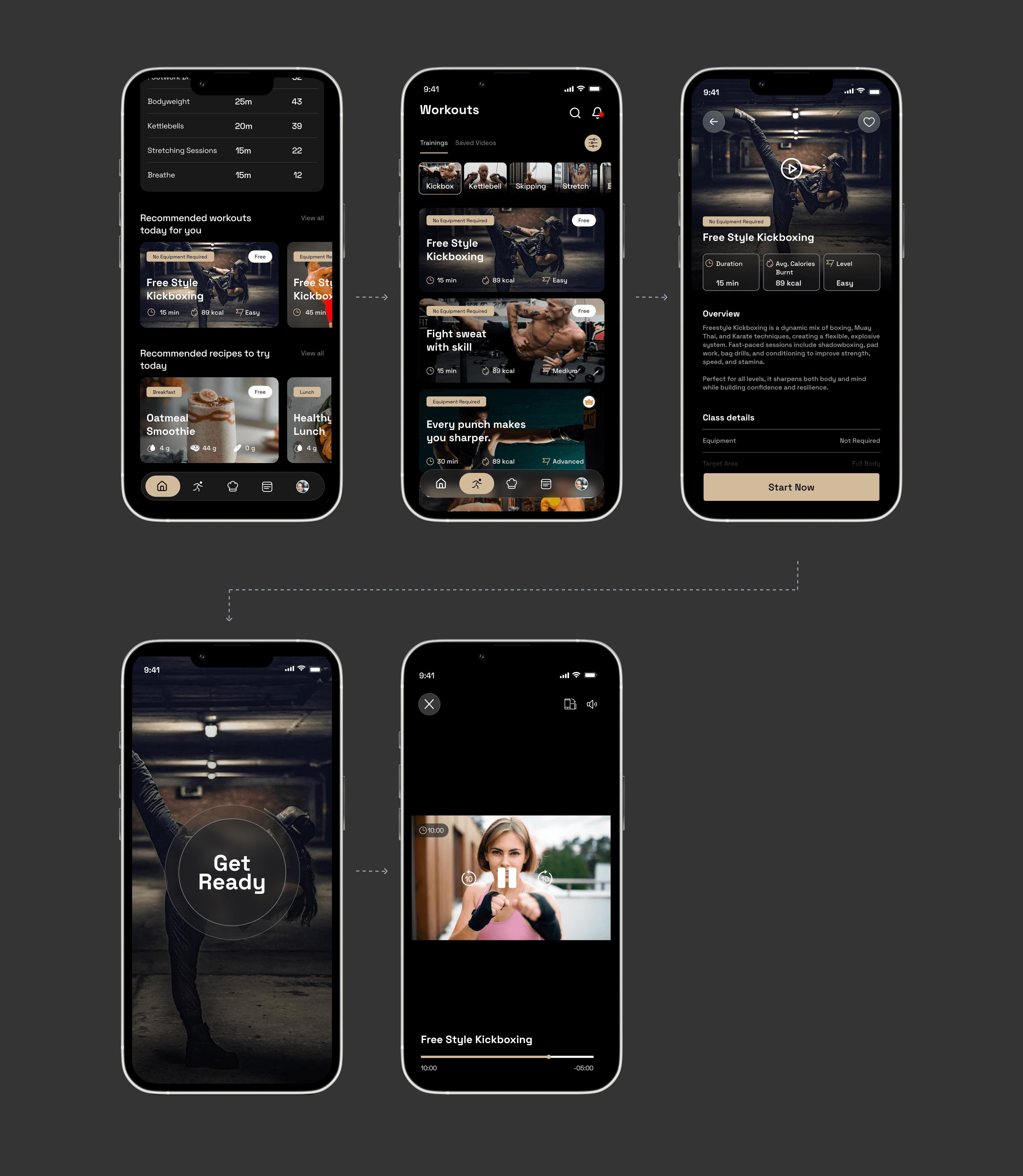
2. Accessible Workouts & Programs
Home-based routines across categories like kickboxing, strength, and mobility — with minimal equipment requirements.
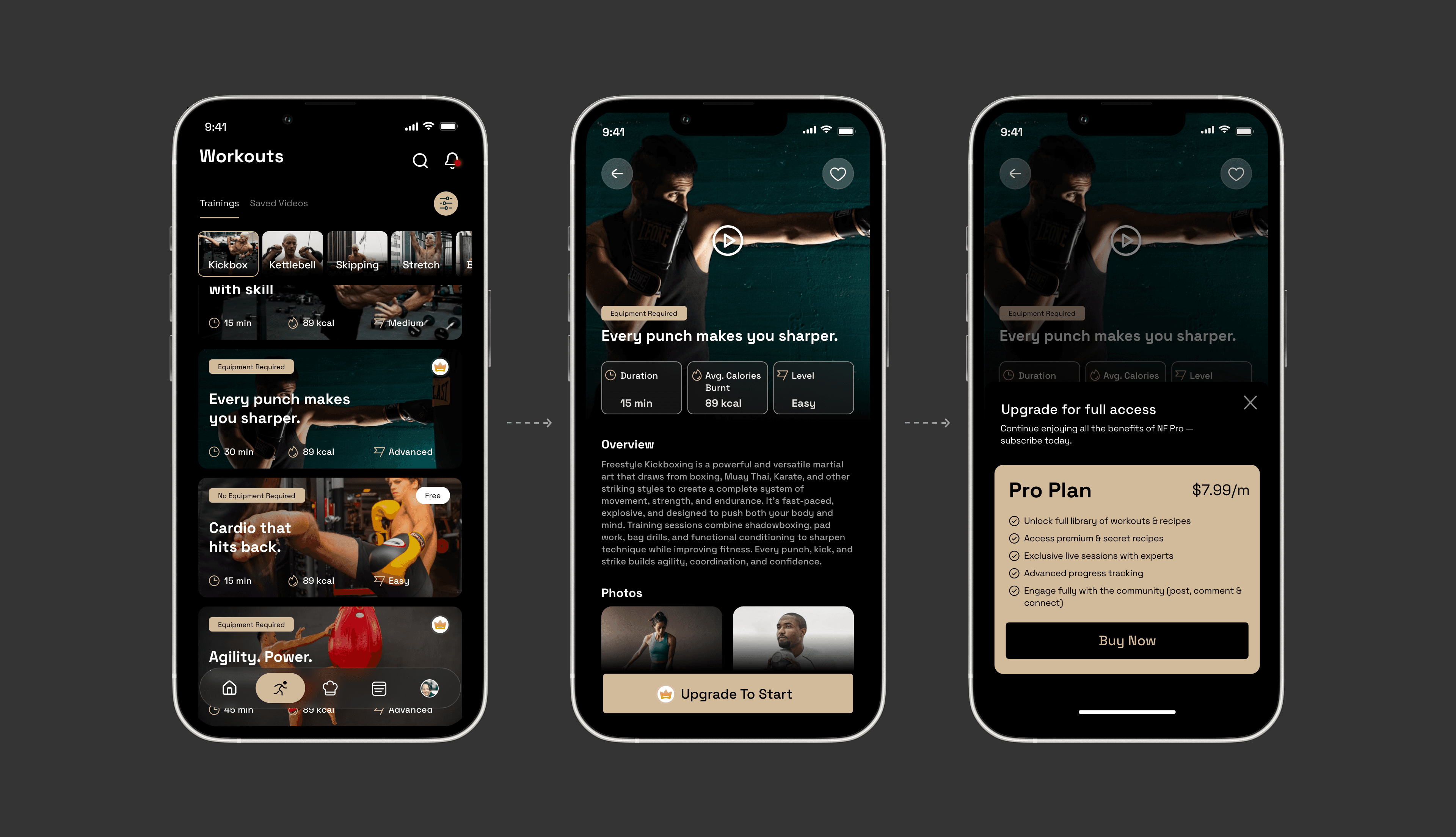
3. Gated Premium Experience
Clear upgrade paths with locked content previews, maintaining a balance between free value and paid conversion.
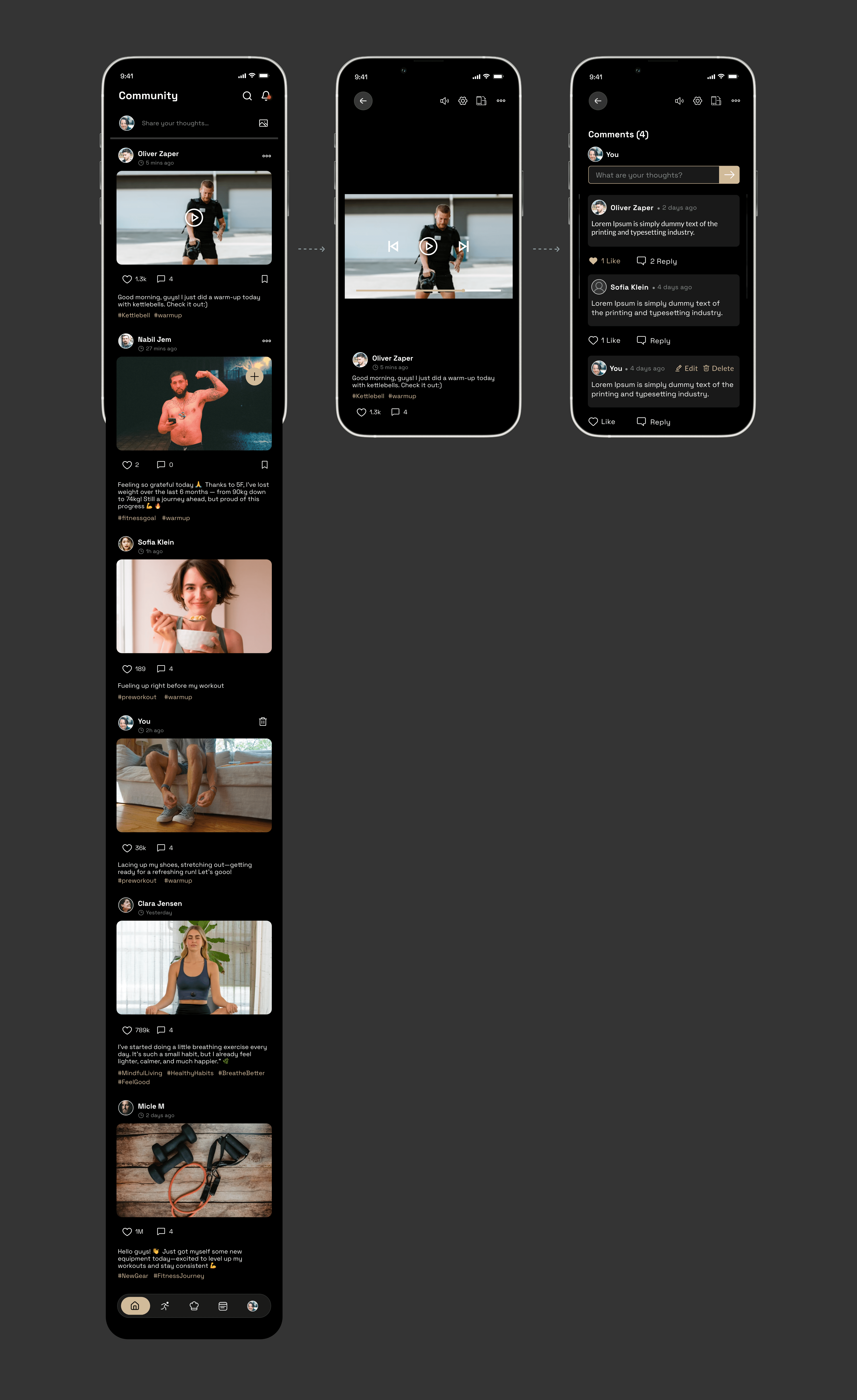
4. Community & Social Engagement
A dedicated community space where users can share workout updates, post photos/videos, and motivate each other through their fitness journey. This creates a sense of accountability and belonging, helping users stay consistent and grow together.
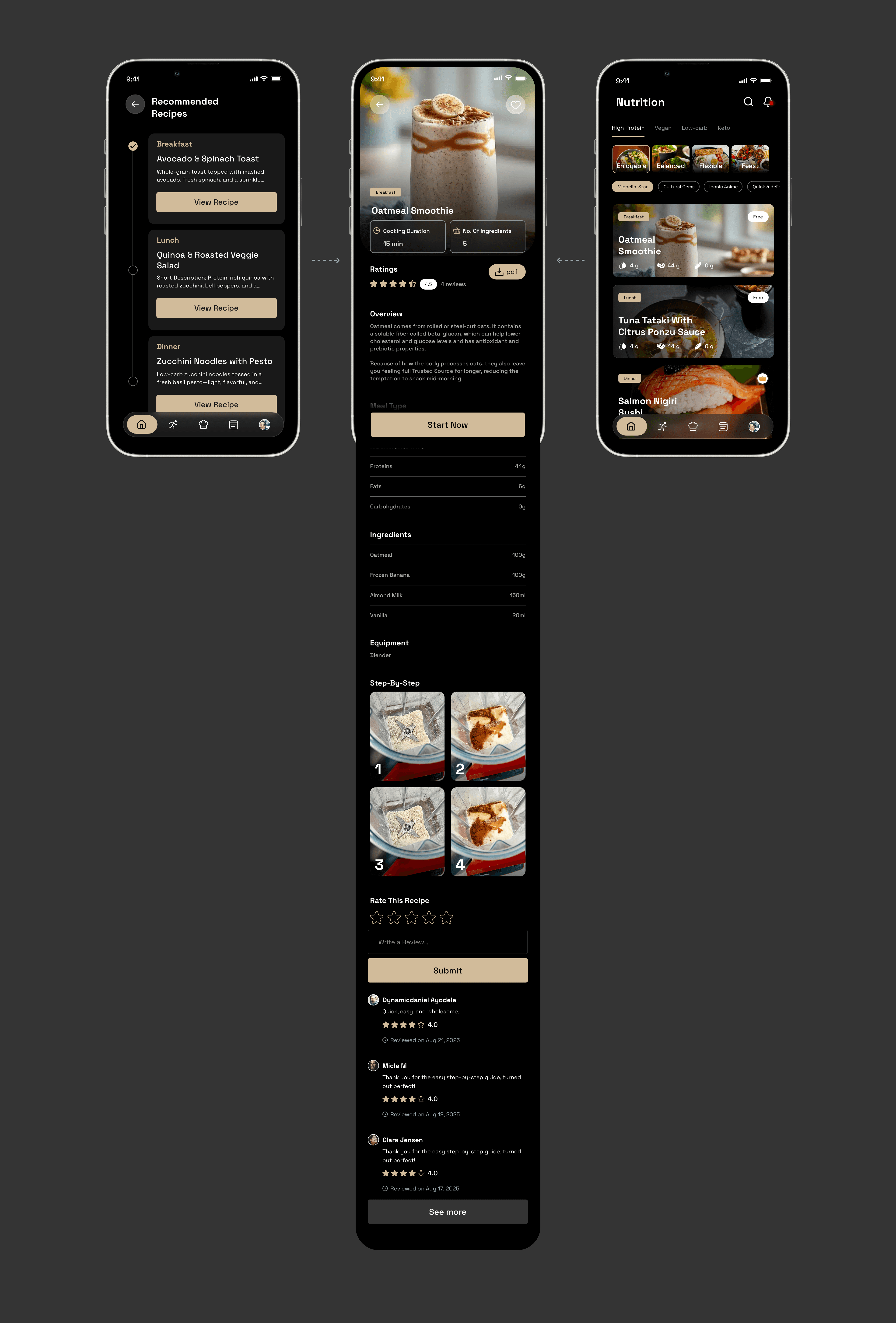
5. Nutrition & Meal Guidance
Personalized meal suggestions, recipes, and nutrition-focused courses designed to support users alongside their fitness journey.
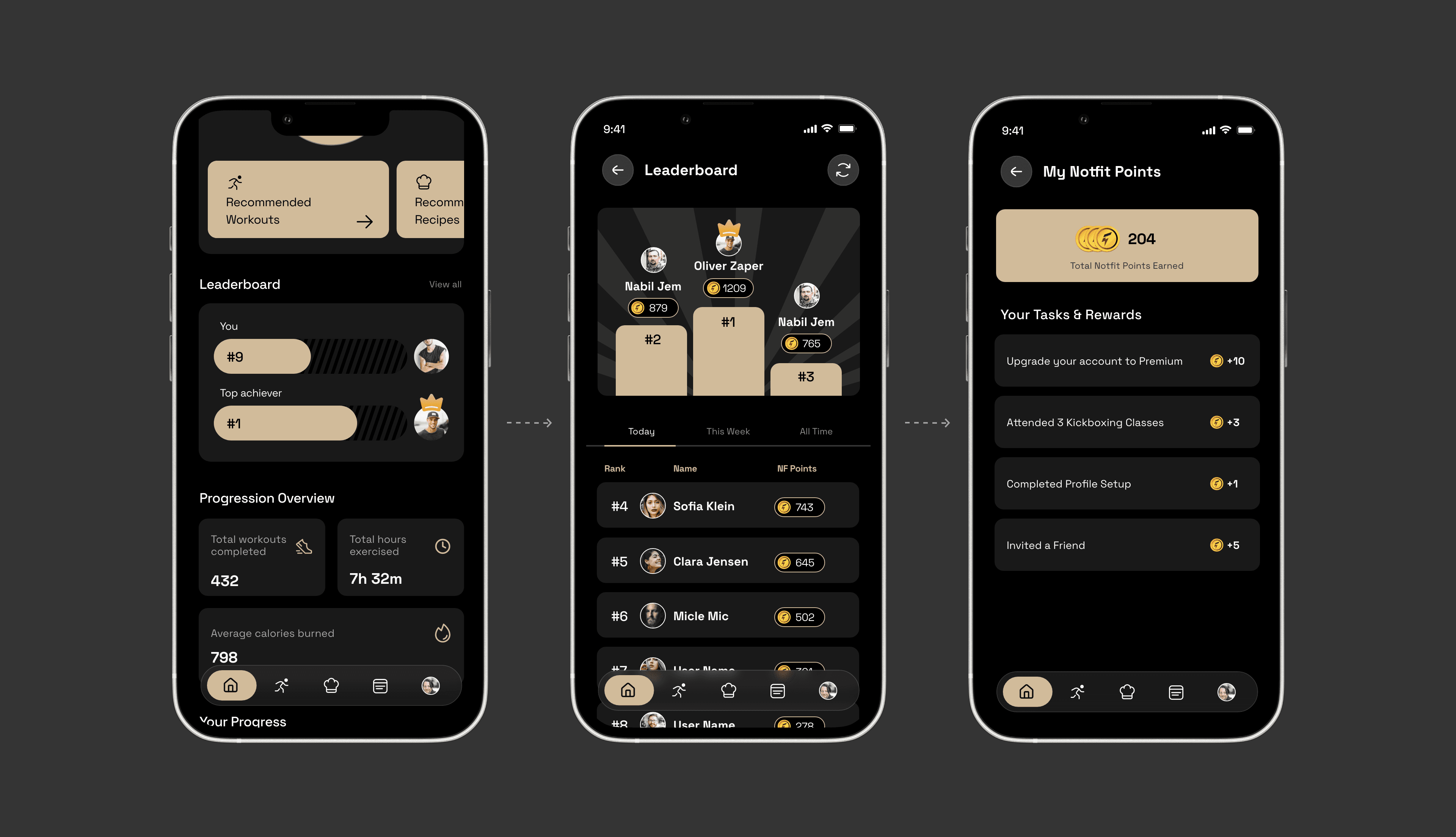
6. Gamification & Rewards
A points-based system (F Points) that rewards user activity, helping build motivation, consistency, and long-term engagement.
The result is a product that transforms fitness from a structured obligation into a habit-driven, engaging daily experience — powered by design simplicity and creator influence.
year
2026
timeframe
Dec 2025 – Mar 2026
tools
Adobe XD, ChatGPT, Jira
category
UI/UX